


Operation Epic Fury, a war of aggression launched on false pretenses, has failed to topple the government of Iran or force the “unconditional surrender” President Trump demanded on the seventh day of a war that’s now in its seventh month.
In April, the Trump administration escalated America’s long-running economic war on Iran by launching Operation Economic Fury. Grasping at straws in August, the administration announced a sequel, Operation Economic Outcast, which aims to “sever every economic lifeline” of the Iranian government until it succumbs to “economic asphyxiation.”
Though the rhetoric focuses on Iran’s government, economic sanctions always fall hardest on innocent citizens. Make no mistake, that’s the point: Mirroring the morality of terrorism, economic sanctions intentionally inflict suffering on civilian populations to force political change. When Treasury Secretary Scott Bessent crows that Iran’s economy has been “decimated…to a point where the rial has never been weaker and inflation has rarely been higher,” he’s implicitly celebrating misery imposed on 93 million people.
Comfortably detached Westerners are prone to equating economic hardship with declining stock indexes or shrinking macro-economic measures like GDP. However, economic hardships are manifested in deeply personal ways, to include soaring prices for goods and housing, job loss, poverty, psychological depression, substandard health care, homelessness, malnutrition, starvation, disease and death.
Most are oblivious to the fact that sanctions kill, but the death toll is truly staggering. In a 2025 study published by The Lancet, researchers concluded that, between 1971 and 2021, sanctions were associated with 38 million deaths around the world. Indeed, the study found several times more people are killed by sanctions than by military action, which underscores a stark reality: sanctions are not an alternative to war, they are a different form of war.
Rearranging the old expression, the death of millions is a statistic; the death of one person is a tragedy — so let’s examine the tragedy that US-led sanctions inflicted on one innocent young woman in Iran, and on the many people who loved her.
To the extent any American has ever heard of Bushehr, Iran, it’s likely because the Persian Gulf port city is home to Iran’s only commercial nuclear reactor, and has been targeted by US and Israeli bombs. Bushehr is also home to nearly 300,000 people. In October 2016, one of those people was a promising 23-year-old Iranian woman named Ameneh Abbasi (AH-meh-neh ahb-bah-SEE).
Ameneh had earned a bachelor’s degree in laboratory sciences from Payam Noor University of Bushehr. Having passed qualification exams, she was in the midst of registration to further her education with the study of biology when a routine blood test indicated she was anemic. Though she felt fine, the test led to a sequence of conflicting diagnoses and treatments.
The previously asymptomatic young woman began experiencing dizziness and nausea. As doctors struggled to effectively treat her with medicines and transfusions, she began having breathing problems, heart palpitations, loss of consciousness and eventually a heart attack.
Ameneh’s hemoglobin count was beyond alarming: Healthy young adult women typically have hemoglobin readings between 12 and 15.5 — Ameneh’s was only 2. When a blood sample was sent to Tehran for advanced analysis, it became clear why transfusions seemed to be worsening her condition: Ameneh’s blood type was the rarest in the world, RH-null.
“Probably only a handful of people in the world have this blood type,” Dr. Mostafa Moghadam, who was then director of the Iranian National Rare Donor Program, explained in a heart-wrenching documentary created by Dr. Habib Ahmadzadeh, a Tehran University professor. “It is known as the Golden Blood Group.” (The full documentary, “Ameneh’s Golden Blood,” is embedded below. The documentary, along with additional information provided by Ahmadzadeh, is the source for my telling of her story.)
To call RH-null blood “rare” is the greatest of understatements: According to the Cleveland Clinic, fewer than 50 people in the world have ever been reported to have this blood type.
Iran keeps an inventory of rare blood, but it didn’t include RH-null. As Ameneh lay in a hospital bed, her doctors and family instantly recognized the desperation of her situation. The race was on to find a bag of RH-null blood from somewhere — anywhere — on Earth, so Ameneh could receive a life-saving transfusion.
Moghadam reached out to colleagues in 23 countries and anxiously awaited replies. First came a flurry of similarly disappointing responses: “We don’t have it.” A few countries had individuals with the right blood type, but who were too old or ill to donate. A few others had units of RH-null blood in their repositories, but weren’t allowed to send it away.
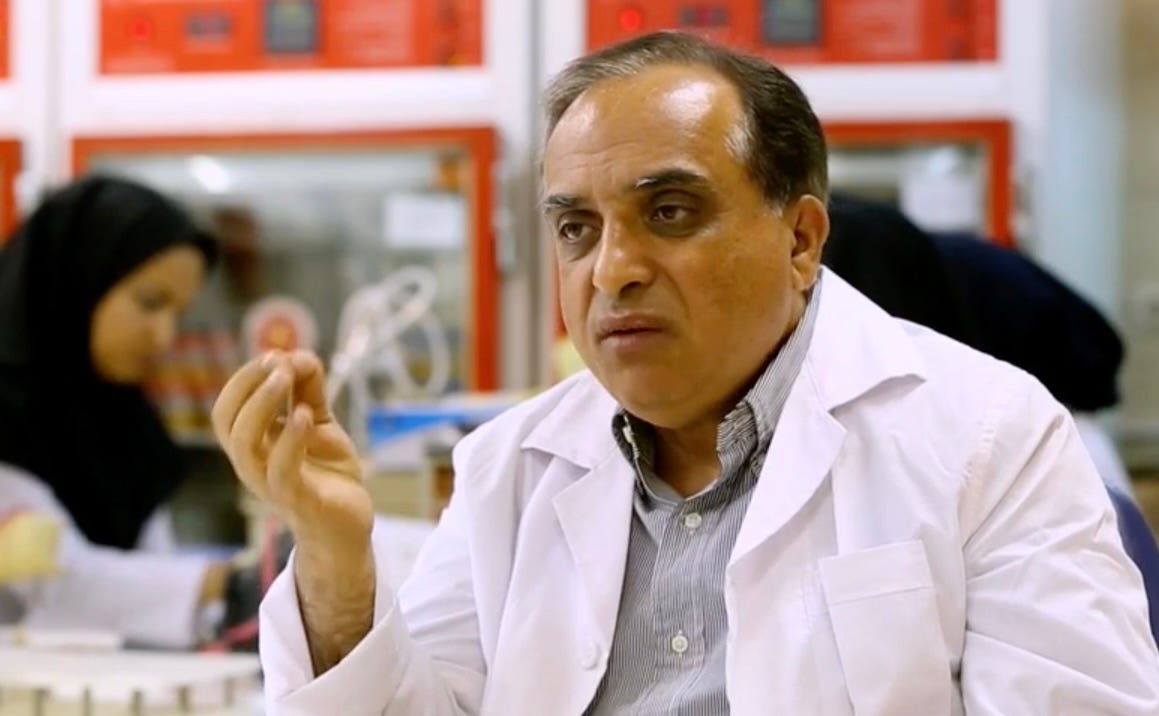
While Moghadam worked his global network, Iranians who learned of Ameneh’s plight earnestly tried to help, submitting to tests to see if they had the extraordinarily rare blood. When someone in Khormoj, Iran was identified as having RH-null blood, Ameneh’s family was overjoyed, only to have their spirits dashed when subsequent testing found that not to be the case.
Then, several grueling days after Ameneh’s blood type had been identified, promising news arrived: A healthy, willing RH-null donor in Basque had been identified. Compounding the sense that they’d been granted a miracle, the news reached Ameneh’s family on the martyrdom anniversary of Imam Reza, a descendent of the Prophet Muhammad who is the subject of enormous devotion in Iran. “My father said that Imam Reza showed me his miracle again,” Ameneh’s sister, Fatemeh, said in the documentary.
At the hospital in Bushehr, Ameneh’s mother, Mahin, assured her daughter that salvation was at hand: “I said, ‘Ameneh, be happy. Blood has been found. Foreign blood has been found’.”
However, as hope soared anew in Tehran and Bushehr, a sinister force was lurking — the US-led sanctions regime against Iran.
Hossein Fatourehchi, an Iranian resident of Spain who was facilitating the logistics of rushing the blood to Iran, found an international shipping company that agreed to do it for 1,000 euros. Then, after a day of coordination, the shipper backed out.
“The company helping to transfer the donated blood said, ‘Due to sanctions, we cannot continue cooperating. We are afraid of America. If we do this, they will definitely cause problems for us and will sanction us too’,” said Ameneh’s father, Latif.
It was an apparent manifestation of a maddening aspect of economic sanctions known as “over-compliance.” Though US sanctions provide “humanitarian carveouts” — exceptions for the transfer of certain goods like food and medicine — most businesses and financial institutions decide they’re best off avoiding the targeted country altogether, for fear of running afoul of the US Treasury Department and becoming a sanctions target themselves.
With the commercial shipper backing out, Ameneh’s aspiring rescuers decided to use a passenger airline instead. Here, the race to save her life ran into another impediment that sprouted from Western sanctions. Iran’s flagship carrier, Iran Air, had been placed on the European Union’s safety blacklist. Only a small subset of Iran Air’s fleet was deemed safe to fly to and from the EU, because sanctions obstruct access to crucial spare parts. As a result, there weren’t any flights from Spain to Iran.
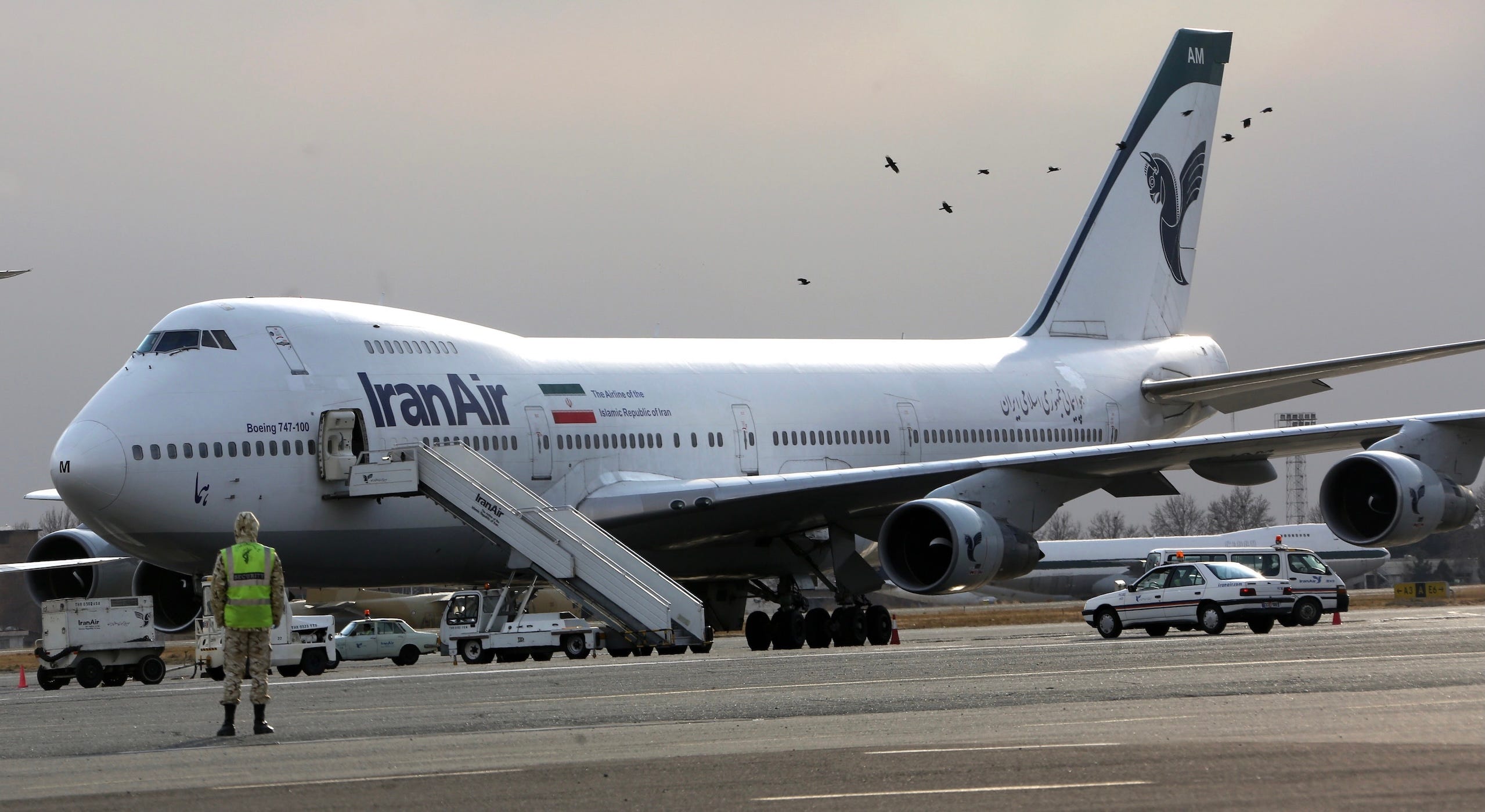
“The first flight that we could get the blood transferred with as soon as possible was from Hamburg, Germany,” Fatourehchi said. “We sent the blood from a hospital in Bilbao to Madrid by a special ambulance. The embassy received it from Madrid and sent it to Hamburg” via Lufthansa.
Employees at Iran’s Hamburg consulate received the package only three hours before it was to leave for Iran. Moghadam coached them on how to preserve it. “I explained we need a three-layered tarpaulin bag and the ice should be on top of it,” Moghadam recalled. One of the consulate workers rushed to a pharmacy to buy the special bag with his own money. “I was constantly in touch with him to help him in packaging it,” Moghadam said. “Because the blood should not be exposed to the ice, otherwise it would freeze.”
Moghadam was waiting at the Tehran airport when the blood arrived at 8:45 pm. Before it could be flown to Bushehr at 5:00 the next morning, the blood needed to be prepared. “My colleagues and I worked on that blood for more than two hours,” Moghadam said.
Ameneh’s father received a phone update from Moghadam as his team worked on the blood. “He said there was no problem with the blood, thank God, and now we have what we needed. You can be sure that with 80cc of blood infusion, the recovery will start and hopefully the hematopoiesis will begin to function on its own,” Latif Abbasi said, referring to the process by which the body creates new blood cells.
After the extraordinarily difficult quest to first find RH-null blood and then transport it to Iran, Moghadam’s spirits were high: “I was really over the moon.”
Then, at 5:00 am, he received a text message from Ameneh’s doctor. She had died overnight. Time lost to sanction-driven delays meant the blood arrived only hours too late to save her.
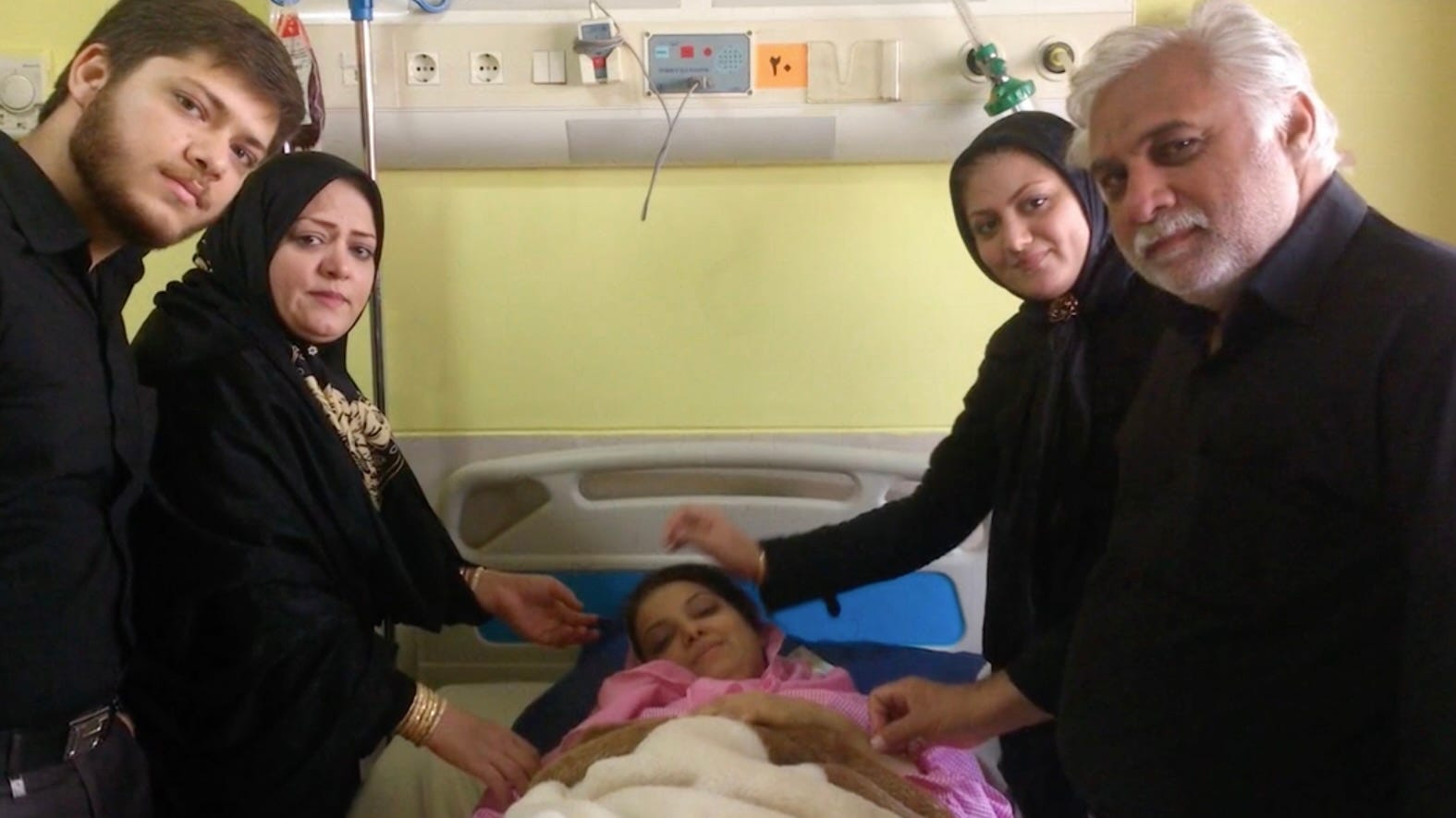
The United States and its allies have been imposing economic sanctions on the people of Iran for nearly 50 years. Though most US rhetoric about sanctions focuses on the supposed sins of the government, officials occasionally reveal their intention to cause misery for innocent Iranian citizens.
For example, during the “maximum pressure” campaign of Trump’s first administration, then-Secretary of State Mike Pompeo said, “Things are much worse for the Iranian people, and we’re convinced that will lead the Iranian people to rise up and change the behavior of the regime.”
Amid last month’s rollout of Operation Economic Outcast, Treasury Secretary Scott Bessent wrote, “Our objective is to sever every economic lifeline that sustains the tyrannical regime.” (He also scolded countries that continue to engage in commerce with Iran — including those who “welcome Iran’s flights.”) However, as the tragedy of Ameneh illustrates, economic lifelines are human lifelines.
Ameneh is one of countless sick Iranians who have been victimized by America’s economic warfare. Among other observations, a 2019 report by Human Rights Watch found:
Iranian patients with rare diseases were finding it increasingly difficult to access essential, imported medicines
A pediatric cancer treatment center was unable to acquire medications deemed essential by the World Health Organization
Patients with epidermolysis bullosa—a rare disease that causes blistering— had their supply of a special kind of foam dressing cut off when a European producer ceased business in Iran due to U.S. sanctions. The domestic alternative dressing “often gets attached to the blisters, causing excruciating pain for the patients,” explained an attorney representing a health NGO.
Though sanctions are particularly evil where the sick are concerned, it bears emphasis that they inflict unquantifiable harms across the targeted population.

One of the cruelest realities of sanctions is that, for all the suffering they impose on innocent people, they aren’t even effective in achieving their advertised policy goals. That’s the conclusion of, among others, the University of Chicago’s Robert Pape, who has studied sanctions for decades. Writing at his Escalation Trap newsletter in August, Pape said Trump’s escalation of economic warfare on Iran won’t break sanctions’ long losing streak, but will cause problems for the entire world:
From the post-WWI blockades to modern conflicts, massive economic sieges consistently fail to break a regime’s political will. Instead, they often trigger a predictable, catastrophic reaction. By backing Tehran into a corner, this financial siege poses an imminent risk to global energy markets, threatening to shut down critical shipping lanes and spike oil prices overnight.
US foreign policy brings physical harm to Americans — for example, US support for Israel was a central motivator of 9/11. Similarly, sanctions bring economic harm back home. That starts with the tyrannical obstruction of commerce with the targeted country. To take just one example, when Trump withdrew the United States from the 2015 Iran nuclear deal and reimposed sanctions, Boeing lost about $20 billion in orders for civilian airliners that Iran placed after the JCPOA was signed.
Far broader harm for everyday Americans is unfolding. The United States uses sanctions so reflexively that we’ve reached a point where about a third of all nations on Earth are being victimized by US sanctions, which center on preventing targeted countries, banks, companies and individuals from using the US dollar.
As I’d warned here at Stark Realities in 2022, the weaponized dollar is now starting to explode in America’s face, as countries around the world are collaborating to de-dollarize their commerce. Even countries that aren’t targeted by sanctions have ample reason to do so. A substantial reduction in worldwide demand for the dollar will harm Americans in many ways: costlier imports, larger federal deficits, higher interest rates, and the potential for catastrophic hyperinflation.
Empathy for the countless victims of their government’s cruel economic warfare should be sufficient reason for every American to demand the end of sanctions. If that’s not enough, they should demand a halt out of pure self-interest.
Watch “Ameneh’s Golden Blood”
Produced by University of Tehran Professor Habib Ahmadzadeh, this documentary portrays the international race to save the life of Ameneh Abbasi

So very sad so much killing and dying for both sides and what for?
Excellent and moving account of how sanctions harm ordinary productive and promising people in the real world.
'It was an apparent manifestation of a maddening aspect of economic sanctions known as “over-compliance.” '
Americans see that chilling phenomenon of “over-compliance” in lots of every-day experiences like KYC, BSA reporting, tech censorship, age verification, etc.